Groupe Médical de Champel
- Phone
- +41 (0) 22 888 44 06
- Availability
- Monday, Tuesday, Thursday, and Friday 08:00–16:00

Surgery
Surgical treatments for women's health problems, designed for optimal results and rapid healing.
Operative hysteroscopy involves directly accessing the uterine cavity through the natural opening (the cervix). Unlike laparoscopy, it does not require any incision in the abdominal wall.
Dr. Choffel uses a hysteroscope, a very thin instrument (a few millimeters) equipped with a high-definition camera and a channel through which micro-instruments (scissors, forceps, or an electric loop) can be inserted.
Visualization : The uterine cavity is distended with a sterile fluid to allow for a clear view of the walls.
Surgical Procedure : Under direct video guidance, the surgeon removes the lesion (polyp, fibroid) with extreme precision, while preserving the surrounding healthy endometrium.
Hysteroscopy is the preferred technique for treating several intrauterine conditions:
Uterine polyps : Simple and quick removal.
Submucosal fibroids : Removal of fibroids that grow into the uterus.
Synechiae : Release of scar tissue adhesions within the uterus.
Uterine septa : Correction of congenital malformations.
Endometrial hyperplasia : Treatment of excessive bleeding.
Operative hysteroscopy is a minimally invasive surgical procedure that transforms the post-operative experience:
No scarring : Because the procedure is performed through the natural openings, there are no visible marks on the body.
Outpatient surgery : In most cases, you arrive at the clinic in the morning and leave a few hours after the procedure.
Immediate recovery : Pain is generally comparable to mild menstrual cramps. A return to normal activities is possible the very next day.
Preservation of fertility : By avoiding incisions in the uterine muscle, this technique is ideal for women planning a pregnancy.
The procedure is performed in the operating room, most often under short general anesthesia or spinal anesthesia (local anesthesia of the lower body), to ensure complete comfort and perfect immobility. It lasts on average between 15 and 30 minutes.
Operative hysteroscopy embodies modern surgery: effective, precise, and respectful of the woman’s physical integrity. It is the gold standard for treating abnormal bleeding and optimizing the chances of conception.
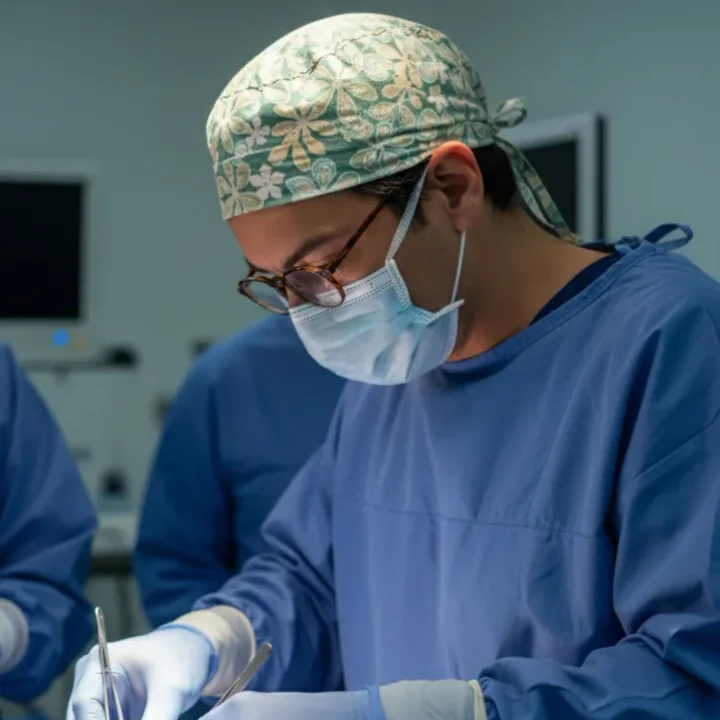
Unlike traditional surgery (laparotomy), laparoscopy involves operating “with the abdomen closed.” The surgeon accesses the pelvic cavity through 3 or 4 small incisions of 5 to 10 millimeters (approximately the size of a shirt button).
Pneumoperitoneum : A harmless gas (carbon dioxide) is introduced into the abdomen to create a working space, lifting the abdominal wall to provide a clear view of the organs.
The Optics : A miniature high-definition camera is inserted through the navel. It transmits a magnified and highly detailed image onto a large screen in front of the surgeon.
The Instruments : Through other small incisions, Dr. Choffel inserts very fine surgical instruments (forceps, scissors, suture tools) to perform the procedure.
This technique offers considerable advantages over traditional open surgery:
Faster recovery : Hospital stays are shorter (often outpatient or just one night).
Less pain : Muscle and skin trauma are minimal, reducing the need for strong painkillers after the operation.
Aesthetic result : Scars are tiny, almost invisible in the long term, and located in discreet areas (navel, bikini line).
Fewer complications : The risk of infection and bleeding is significantly lower.
Superior surgical vision : The camera allows visualization of anatomical details invisible to the naked eye, which is crucial for treating endometriosis or preserving fertility.
Laparoscopy now allows for almost all gynecological procedures:
Treatment of ovarian cysts.
Diagnosis and excision of endometriosis.
Removal of myomas (fibroids) while preserving the uterus.
Management of ectopic pregnancy.
Fertility assessment (dye test to check tubal patency).
Hysterectomy (removal of the uterus) if necessary.
The procedure is always performed under general anesthesia. Although the incisions are small, it is a genuine surgical procedure requiring the expertise of a practitioner experienced in minimally invasive techniques.
Laparoscopy is, for me, the gold standard. It allows for an extremely aggressive approach to the pathology (such as endometriosis) while being as respectful as possible of the patient’s body.
The Da Vinci surgical system represents the fusion of cutting-edge optical technology and precision micromechanics. For Dr. Alexy Choffel, it is the preferred tool for performing complex gynecological procedures with ultra-precise and non-invasive precision.
Contrary to popular belief, the robot is not autonomous. Dr. Choffel sits at a control console and manipulates ultra-sensitive joysticks. The robot faithfully and instantly reproduces his movements, filtering them for perfect stability.
High-Definition 3D Vision : The surgeon is “immersed” inside the body, with a three-dimensional view and exceptional magnification, allowing him to distinguish even the finest structures (nerves, blood vessels).
Enhanced Dexterity : The robotic micro-instruments mimic the movements of the human hand, but with a 360-degree rotational range, surpassing conventional anatomical limitations.
The choice of this technology is driven by the desire to offer conservative surgery that respects your anatomy and your desire for motherhood.
Precision above all : Essential for the removal of deep endometriosis, where every millimeter counts to preserve healthy organs (bladder, rectum).
Quality of Reconstruction : Crucial for suturing the uterus after the removal of large fibroids, ensuring a strong scar for a future pregnancy.
Post-operative Comfort : The incisions are tiny, reducing pain and the risk of bleeding, and allowing for a very quick return to normal life.
The Da Vinci robot allows me to perform exceptionally complex surgeries while ensuring the highest possible level of protection for my patient. It’s technology at the service of humanity.
About
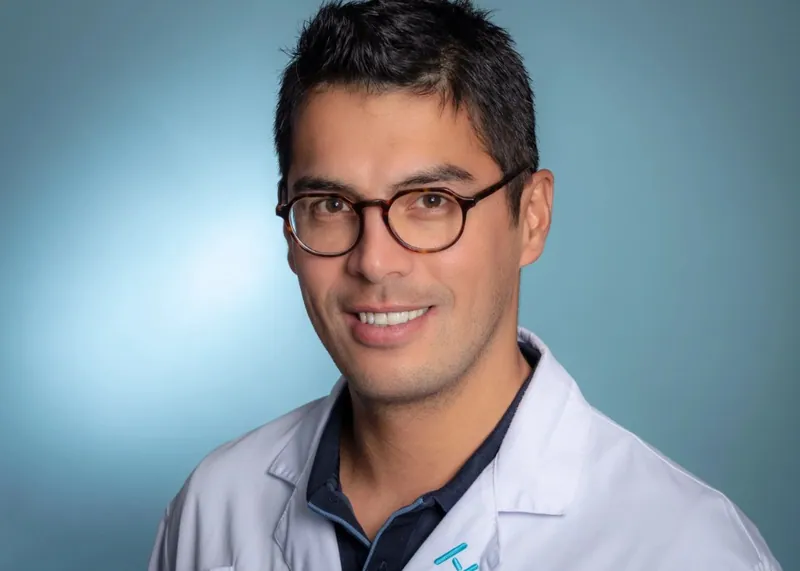
Demanding yet deeply human medicine, centered on every woman and her priorities. Attentive listening, surgical expertise and personalized care to guide you at every step of your healthcare journey.
Learn more about AlexyStart your journey to better health today

Contact